
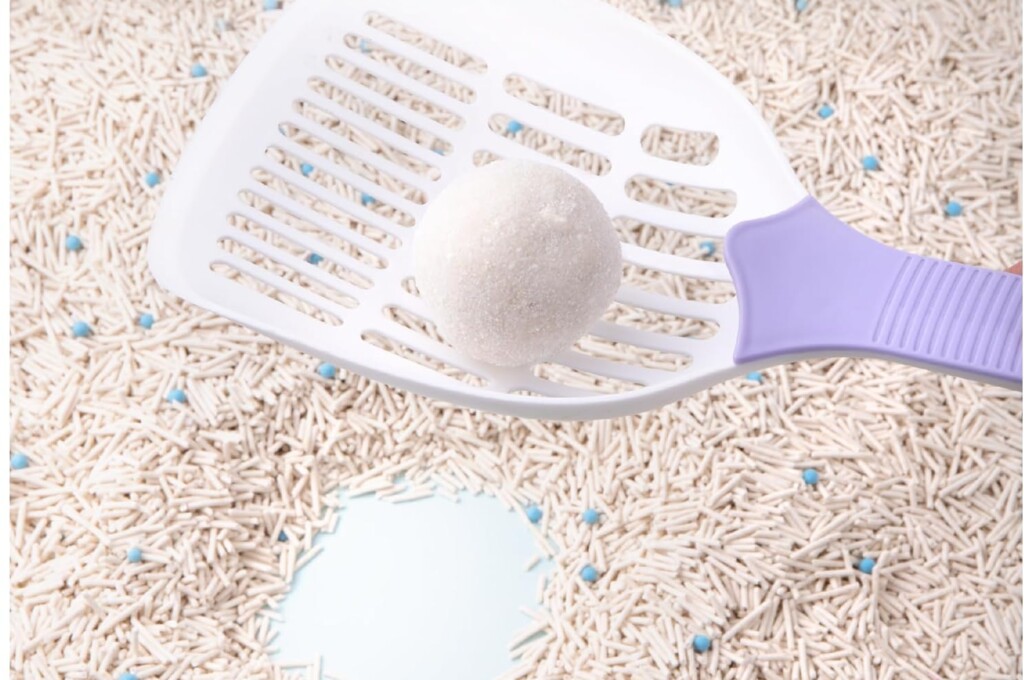
Most people do not think about cat litter as an environmental issue. It is just something you buy, use, and throw away. But conventional clay litter — the kind that has dominated the market for decades — is strip-mined from the earth, non-biodegradable, and ends up sitting in landfill indefinitely. For something that gets used and discarded multiple times a week, that adds up to a significant amount of waste over the lifetime of a cat.
The good news is that the alternatives have improved dramatically. Plant-based litters made from tofu, cassava, corn, and wood are now widely available, genuinely effective, and in many cases cheaper per use than traditional clay when you factor in how much longer they last.
The switch is also one of the easier eco changes to make. Unlike some sustainability decisions that require compromise, a good plant-based litter performs as well or better than clay. It clumps, controls odour, and for most cats, the transition is seamless.
For households with multiple cats, the environmental impact of making the switch is even more meaningful. More cats means more litter, more waste, and more opportunity to make a difference simply by choosing differently.
It is a small decision that adds up. And for anyone already thinking carefully about sustainability in other areas of their life, the litter box is worth a second look.